Amul Hikes Ghee and Butter Prices Ahead of Diwali 2026: Check New Rates and Impact on Food Businesses
By Taranpreet Arora · Published · 6 min read
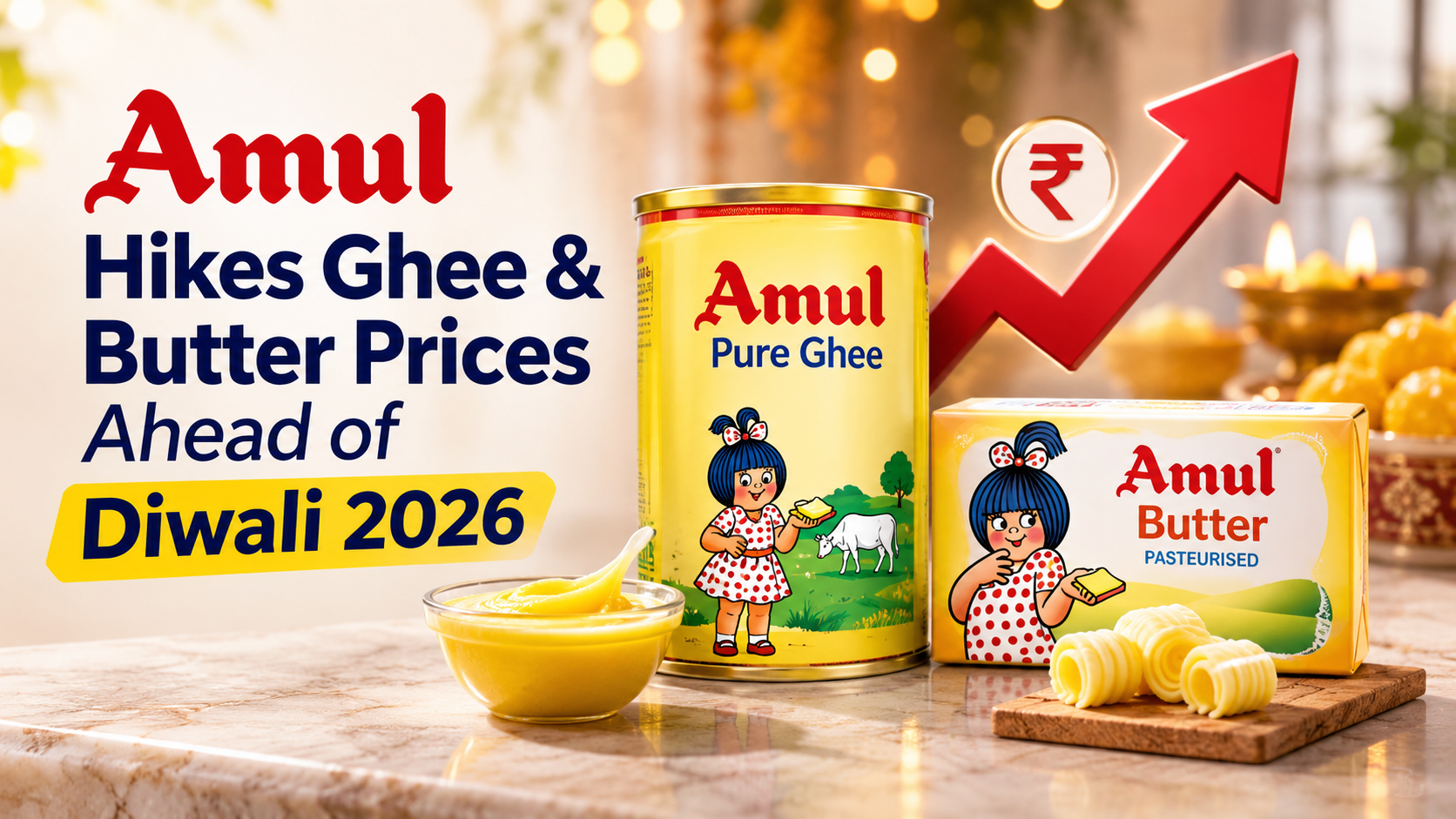
India's leading dairy brand, Amul, has increased the prices of its ghee and butter products just days before Diwali 2026, adding pressure to household budgets and commercial kitchens during one of the busiest food consumption periods of the year.
The Gujarat Cooperative Milk Marketing Federation (GCMMF), which markets dairy products under the Amul brand, has revised prices across selected ghee and butter variants, citing rising milk production costs.
According to the company's statement reported by PTI, the revised prices became effective on November 2, 2026. The increase comes at a time when restaurants, bakeries, sweet shops, caterers, and hotels are preparing for increased festive demand.
Industry News - Business Standard+1
Amul Ghee and Butter New Price List – November 2026
Consumers and food businesses will now have to pay more for several popular Amul dairy products.
Amul Product | Old MRP | New MRP | Increase |
|---|---|---|---|
Amul Ghee (1 litre pouch) | ₹640* | ₹680 | ₹40 |
Amul Pure Ghee (500 g pouch) | ₹325 | ₹345 | ₹20 |
Amul Cow Ghee (1 litre pouch) | ₹695 | ₹735 | ₹40 |
Amul Butter (100 g) | ₹63 | ₹66 | ₹3 |
Amul Butter (500 g) | ₹310 | ₹325 | ₹15 |
*Some reports quote ₹630 as the earlier price of a 1-kg ghee carton, representing a ₹50 increase. The 1-kg carton and 1-litre pouch are distinct pack descriptions and should not be treated as interchangeable. Prices are reported MRPs and may vary by variant and packaging. Sources:
India Today+2
The revised prices represent a notable increase for businesses purchasing dairy ingredients in large quantities.
Why Has Amul Increased Ghee and Butter Prices?
Amul has attributed the latest price revision primarily to higher milk production input costs.
GCMMF, a dairy cooperative owned by approximately 36 lakh farmers, stated that increased production costs made the revision necessary.
Industry News - Business Standard+1
Several factors are influencing the dairy market:
1. Rising milk production costs
Higher input costs associated with milk production are putting pressure on dairy manufacturers and cooperatives.
2. Increased festive demand
Diwali is traditionally a peak consumption period for ghee and butter. These ingredients are widely used in Indian sweets, traditional dishes, bakery products, and festive catering.
3. Supply constraints in certain markets
Retailers in Gujarat, particularly in Ahmedabad and Vadodara, have reported limited availability of certain Amul products, including cow ghee.
The Times of India+1
4. Growing demand for trusted dairy brands
Reports of enforcement action against suspected adulterated ghee in Gujarat and Rajasthan have also been associated with stronger demand for established packaged dairy brands.
DeshGujarat+1
How Will the Amul Price Hike Affect Restaurants, Bakeries and Hotels?
For India's HoReCa (Hotels, Restaurants and Catering) sector, even a small increase in essential ingredient prices can affect operating costs.
Ghee and butter are widely used across professional kitchens, from preparing traditional Indian meals to producing baked goods and premium desserts.
1. Higher food preparation costs
Restaurants using ghee for gravies, biryanis, dals, and traditional Indian dishes may experience increased ingredient costs.
For example, a commercial kitchen purchasing 50 one-litre pouches of Amul ghee at an additional ₹40 per pouch would incur approximately ₹2,000 in additional procurement costs for the same quantity.
2. Increased bakery production expenses
Butter is a key ingredient in cookies, cakes, pastries, croissants, and other bakery products.
A bakery purchasing 100 packs of 500 g Amul butter would spend ₹1,500 more at the revised MRP.
For bakeries operating on tight margins, such increases can affect profitability unless ingredient costs and selling prices are carefully managed.
3. Pressure on sweet shops and festive caterers
The timing of the increase is particularly important for mithai manufacturers, halwais, and catering businesses.
Ghee is extensively used in festive sweets such as:
Laddoos and halwa
Barfi and traditional mithai
Gulab jamun and other Indian desserts
Festive snacks and specialty preparations
Businesses fulfilling large Diwali orders may need to reassess their ingredient budgets.
4. Greater importance of procurement planning
Fluctuating ingredient prices make procurement planning increasingly important for professional kitchens.
Restaurant owners and purchasing managers may benefit from monitoring supplier quotations, maintaining appropriate inventory levels, and comparing equivalent products across trusted manufacturers.
What Should Food Businesses Do to Manage Rising Dairy Costs?
Rather than immediately increasing menu prices, food businesses can consider several practical steps.
Review ingredient-level costing: Update recipe costing sheets to reflect current ghee and butter procurement rates.
Compare suppliers: Evaluate prices, pack sizes, delivery schedules, and product specifications across authorized suppliers.
Plan inventory carefully: Maintain sufficient stock for expected demand while avoiding excessive purchases and storage losses.
Evaluate bulk procurement: Commercial packaging and volume-based quotations may offer better economics than purchasing smaller retail packs, depending on supplier terms.
Maintain product quality: Avoid compromising food safety or substituting ingredients without considering recipe performance, allergen information, and customer expectations.
Chefs Marche: Helping Food Businesses Make Smarter Procurement Decisions
At Chefs Marche, we understand that ingredient pricing directly influences the profitability of restaurants, hotels, bakeries, caterers, and other food businesses.
As a HoReCa-focused ingredient sourcing destination, Chefs Marche aims to help professional buyers discover food ingredients and supplies suited to their operational requirements.
Whether purchasing dairy products, bakery ingredients, cooking essentials, or other commercial kitchen supplies, comparing product specifications and procurement options is an important part of controlling costs.
Will Ghee and Butter Prices Increase Further?
It is too early to determine whether additional price revisions will follow.
Future prices may depend on milk production costs, supply availability, seasonal demand, and broader dairy market conditions.
Food businesses should monitor official manufacturer announcements and supplier quotations rather than assuming that the current increase signals further price hikes.
Conclusion
Amul's decision to increase ghee and butter prices ahead of Diwali 2026 highlights the importance of ingredient cost management for households and professional kitchens alike.
With the price of a one-litre Amul ghee pouch reaching ₹680 and a 500 g butter pack increasing to ₹325, restaurants, bakeries, caterers, and sweet manufacturers may face higher procurement expenses during the festive season.
For HoReCa businesses, the priority should be to maintain consistent food quality while making informed purchasing decisions.
Explore food ingredients and HoReCa supplies at www.chefsmarche.com.
About the author
Taranpreet Arora, Founder